management, a product is no longer just a physical item on a shelf; it has become a “comprehensive experience” that starts the moment a customer feels a need and ends with the level of satisfaction they feel after use. Understanding and developing product dimensions is what separates companies that dominate markets from those that vanish quickly.
1. The Deep Dimensions of Product Building (The 3-Layer Model)
To succeed in designing your product, you must view it as layers of an onion, where each layer adds value and justifies the price the customer pays:
-
The Core Benefit (The Heart). This is the true and only reason a customer takes money out of their pocket. When someone buys an accounting course, they aren’t buying “videos”; they are buying a “job promotion” or the “ability to manage their money.” If the core fails, everything fails.
-
The Actual Product. These are the tangible characteristics that embody that benefit, including:
-
Quality Level: The product’s ability to perform its function without errors.
-
Design and Features: The ease and aesthetics of the solution.
-
Branding: The name and reputation that grant the customer a sense of trust.
-
-
The Augmented Product (The Competitive Shield). These are the services surrounding the product that make it stand out, such as rapid response to inquiries, genuine warranties, user training, and after-sales services that show your appreciation for the customer.
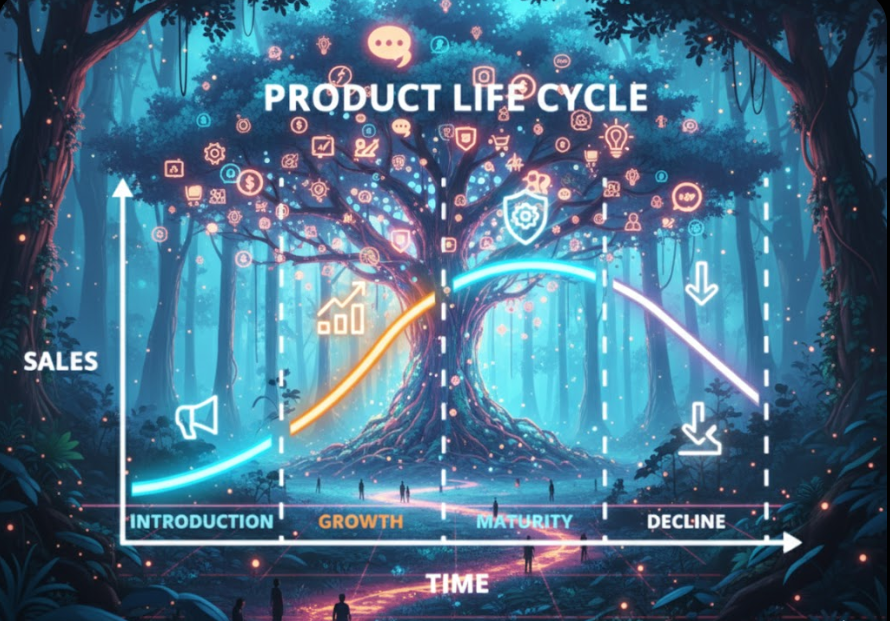
2. Strategic Product Management Over Time (The Life Cycle)
Products are not static; they are living entities that evolve through their stages in the market. Smart management requires a different response at each phase:
-
Introduction Stage. The goal here is “Education.” You aren’t just selling; you are teaching people why they need your product. Costs are high because you are investing in awareness. Success lies in targeting “early adopters” who love trying new solutions.
-
Growth Stage. This is where you reap the rewards. Sales rise rapidly, but beware—this stage attracts competitors like a magnet. The secret here is “Scale” and improving quality quickly to close gaps before new rivals enter.
-
Maturity Stage. The longest phase, where everyone knows you. Competition becomes fierce, especially on price. To avoid the “Price War” trap, you must reinvent your product, add new features, or target new markets.
-
Decline Stage. Every product has an end. When new technologies emerge or tastes change, sales drop. A successful manager knows when to stop pouring money into a dying product and starts redirecting resources toward a new one that fits the current era.
3. The Art of Differentiation: Standing Out from the Crowd
In a market saturated with alternatives, differentiation is the only means of survival. You can differentiate through three paths:
-
Functional Differentiation. Offering technical solutions or features that no one else provides (e.g., a website providing unique financial analysis tools).
-
Emotional Differentiation. Building a mental relationship with the customer that makes them feel a sense of belonging to your brand; the customer buys the “feeling” the product provides.
-
Differentiation through Simplicity. In an age of complexity, “Simplicity” has become a major competitive advantage. The product that saves the customer’s time and mental effort is the one that wins in the end.
4. Innovation Methodology and New Product Development (NPD)
For MngFlow to stay ahead, there must be a non-stop “engine” for product development:
-
Identifying Gaps. Look for the problems people complain about in competitors’ services; these complaints are a “gold mine” for your next product ideas.
-
Small Testing Before Big Launch. Do not invest your entire budget in a product the public hasn’t tested. Build a “Minimum Viable Product” (MVP), show it to a sample of your customers, listen intently to their feedback, and refine it before the official launch.
The product is your ambassador to the customer. It will either be an ambassador that honors you and opens doors to loyalty, or a reason for people to turn away. Always remember that the true value of a product lies not in the number of its features, but in its ability to make the customer’s life easier or their work more profitable.