has evolved into the science of “Value Availability.” The greatest challenge for startups isn’t production; it’s building the “nervous system” that moves output from the innovator’s mind to the consumer’s hand with minimal cost and maximum speed. Place is the pillar that transforms “inventory” into “cash flow.”
1. Strategic Dimensions of Distribution Channels
Distributing your product is a strategic decision that touches your brand identity. It is divided into two levels:
-
Direct Distribution (Total Control). Selling through your own website or owned branches. This path grants you an invaluable treasure: “Customer Data” and the ability to build an emotional connection without intermediaries. It also ensures you retain the full price without commission deductions.
-
Indirect Distribution (The Power of Reach). Relying on agents, distributors, and global marketplaces. This path acts as a “growth accelerator”; it allows your product to be present in cities and countries you might not reach logistically on your own. The secret lies in choosing partners who protect your brand’s prestige.
2. Market Coverage Policies
A product shouldn’t be everywhere just for the sake of exposure; presence must be calculated:
-
Intensive Distribution. For fast-moving goods where success depends on being “within sight” (e.g., consumer goods). The customer won’t wait or search; if you aren’t there, they’ll buy from a competitor immediately.
-
Selective Distribution. For goods requiring a degree of “comparison” (e.g., computers or consulting services). Customers are willing to exert some effort to find you, so choose locations that inspire trust and expertise.
-
Exclusive Distribution. For luxury or highly specialized goods. Here, “Place” is part of the “Scarcity.” The customer travels long distances to reach you, and this effort increases the product’s perceived value.
3. Smart Logistics and Virtual Space
In the e-commerce era, “Place” is condensed into the “Customer’s Screen.” However, behind this screen lies a major logistical battle:
-
Supply Chain Management. A successful “Place” strategy starts with suppliers and ends at the customer’s doorstep. Any failure in the system (like an out-of-stock item) means a lost sales opportunity.
-
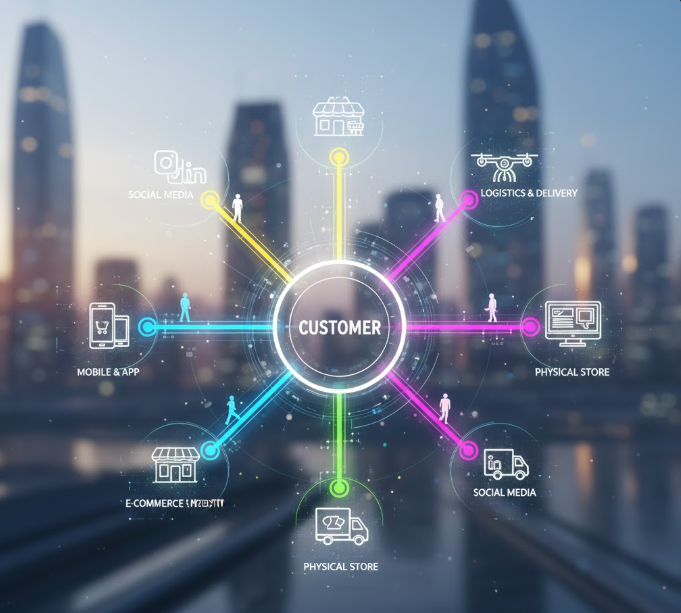
Omnichannel Commerce. Modern customers don’t distinguish between “Digital Place” and “Physical Place.” They expect to research on their phone, try the product in-store, and complete the purchase via an app. Integrating these worlds is the pinnacle of professional distribution.
4. Place as a Competitive Advantage
You can outperform competitors through “Place” even if your product is similar:
-
Strategic Location. Being near your target audience’s gathering points reduces acquisition costs.
-
Digital Usability. For websites, “Place” is the User Interface (UI/UX). If your site is complex, you own a “bad place” that repels customers just like a dark, cramped shop.
Place is the “Bridge.” If the bridge is short, easy, and paved, the customer will cross it repeatedly. If it is long and rugged, they will turn back at the first step. Aim for your “Place” strategy to minimize the effort your customer exerts to reach your solution.