Key Performance Indicators (KPIs) are the language through which strategic goals communicate. They transform ambitious visions into trackable data and facts. A precise system ensures an organization stays on track, shifting employee evaluation from subjective judgment to objective, results-based assessment.
1. How to Formulate an Effective KPI?
-
Identify Strategic Goal: Defining exactly what needs to be achieved.
-
Select Unit of Measure: Currency, percentage, or raw numbers.
-
Define Target Value: The specific number that constitutes success.
-
Determine Frequency: Daily, monthly, or annual measurement cycles.
-
Assign Responsibility: Defining who has the authority to influence the outcome.
2. Leading vs. Lagging Indicators
-
Lagging Indicators: Measure the outcome of past events (e.g., net profit). They are for evaluation but cannot change history.
-
Leading Indicators: Measure activities that drive future results (e.g., number of sales calls). They allow for predicting success.
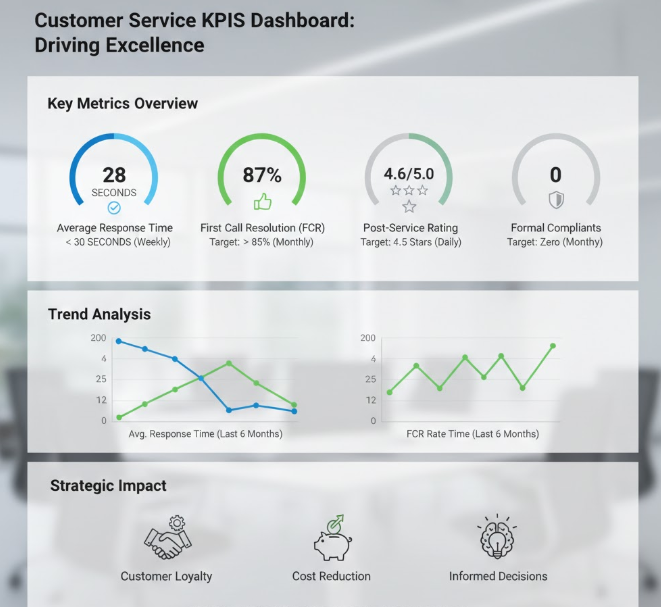
3. Practical Applied Example: Customer Service Department
| Project Goal | Key Performance Indicator (KPI) | Target Value | Frequency |
| Reduce Wait Time | Average Response Time | < 30 Seconds | Weekly |
| Solution Quality | First Call Resolution (FCR) | 85% or Higher | Monthly |
| Final Satisfaction | Post-service Customer Rating | 4.5/5 Stars | Daily |
| Employee Efficiency | Number of Formal Complaints | Zero | Monthly |
4. Benefits of Linking KPIs to Rewards
-
Organizational Justice: High-performing employees receive rewards based on documented data rather than favoritism.
-
Self-Direction: Employees manage their time and effort to align with the targets they are evaluated against.
-
Early Gap Detection: Management can intervene with training or support before issues impact overall annual performance
KPIs are not just numbers; they are a managerial compass. An organization without clear indicators is like a ship sailing in the dark; it may exert great effort, but it will never truly know if it is nearing its destination or drifting away.