In the modern world of project management, it’s no longer enough for a manager to be an expert in timelines and budgets. The role of a Project Manager now demands a unique blend of technical competence and the ability to understand and guide people. This is where Leadership Skills and Emotional Intelligence (EI) become crucial elements in transforming a group of individuals into a cohesive, high-performing unit.
1. The Core Difference Between a Manager and a Leader
-
Manager: Focuses on tasks, processes, short-term goals, adheres to rules, and uses granted authority.
-
Leader: Focuses on vision, inspiring individuals, developing talent, supporting their team, and challenging the status quo. A successful Project Manager combines both: they organize work (manager) and inspire their team to overcome challenges (leader).
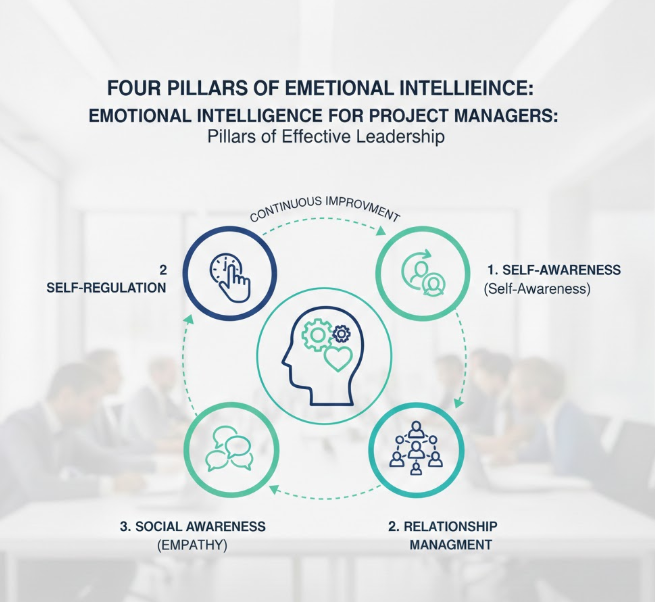
2. The Four Pillars of Emotional Intelligence for Project Managers
According to Daniel Goleman, EI is the fundamental component of effective leadership:
-
Self-Awareness: Understanding your own emotions, strengths, weaknesses, and how your mood affects your team.
-
Self-Regulation: The ability to control and positively channel your impulses, and adapt to changes.
-
Social Awareness (Empathy): Understanding the feelings and motivations of others, appreciating diverse perspectives, and anticipating their reactions.
-
Relationship Management: Building strong positive networks, influencing others, managing conflicts, and collaborating effectively. An Project Manager with high EI can calm tensions, motivate the team, and keep everyone focused on the common goal, even under challenging circumstances.
3. Servant Leadership in Projects
This philosophy is based on the principle that the leader exists to “serve” their team and provide everything needed for success, not the other way around. For a Project Manager, this means:
-
Removing obstacles facing the team.
-
Providing necessary training and resources.
-
Actively listening to team members’ ideas and concerns.
-
Empowering the team to make decisions and take responsibility. This type of leadership fosters trust, loyalty, and unleashes the team’s creative potential.
4. The Art of Motivation and Building a High-Performance Team
A successful Project Manager understands that money isn’t the only motivator. Effective motivation includes:
-
Recognition and Praise: Acknowledging achievements and efforts, even small ones.
-
Providing Autonomy: Giving the team space to make decisions on “how” work will be done.
-
Skill Development: Offering opportunities for learning and professional growth.
-
Connecting to the Bigger Picture: Reminding the team of the importance of their work and how it contributes to the organization’s overall vision.
Today’s Project Manager is not just a “planner” or “organizer,” but a “human architect.” Their ability to understand team dynamics, manage emotions, and inspire individuals is what differentiates a project that barely succeeds from one that exceeds expectations and creates real achievements.