Lean Management is a managerial philosophy aimed at delivering the maximum possible value to the customer using the minimum resources. It is based on a simple yet profound principle: “Any activity that does not add value from the end customer’s perspective is waste that must be eliminated.”
1. The Five Principles of Lean
-
Define Value: Understanding exactly what the customer is willing to pay for.
-
Map the Value Stream: Identifying all steps in the process and highlighting non-value-adding tasks.
-
Create Flow: Ensuring work moves smoothly from one stage to another without interruption.
-
Establish Pull: Starting new work only when there is actual demand.
-
Pursue Perfection: Continuous improvement to reach zero waste.
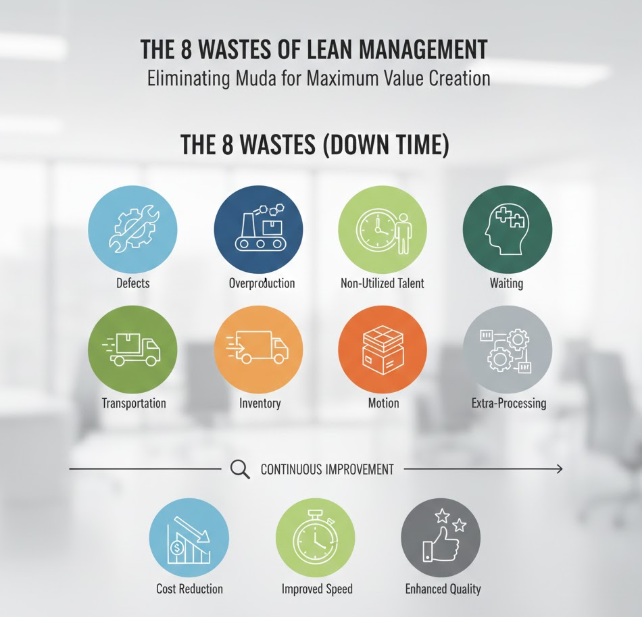
2. The Eight Types of Waste
Lean identifies eight “enemies” of productivity:
-
Defects: Time spent fixing errors.
-
Overproduction: Doing more work than required.
-
Waiting: Time lost waiting for approvals or resources.
-
Non-utilized Talent: Failing to use the team’s full potential.
-
Transportation: Unnecessary movement of info or materials.
-
Inventory: Accumulation of unfinished tasks.
-
Motion: Unnecessary physical movement of people.
-
Extra-processing: Adding features the customer didn’t ask for
3. Benefits of Applying “Lean” in Projects
-
Cost Reduction: By eliminating non-essential activities and saving wasted resources.
-
Improved Speed: Completing tasks in less time thanks to a smooth and continuous workflow.
-
Enhanced Quality: Focusing on value leads to fewer errors and higher customer satisfaction.
Lean management is a mindset focused on working smarter, not harder. A Lean manager is someone who can see hidden waste and purify processes, keeping the team agile, fast, and focused entirely on delivering customer satisfaction.