In an increasingly complex business environment, it is no longer enough for a company to be financially successful; it must also be legally “disciplined.” A compliance audit is a systematic examination to ensure that an entity follows all external laws and regulations (such as tax and labor laws) as well as approved internal policies and procedures. It is the pillar that reassures management and shareholders that the organization is operating within the “correct framework.”
1. Objectives of a Compliance Audit
This type of audit seeks to achieve four core goals:
-
Avoiding Penalties. Protecting the company from fines, lawsuits, and license revocations resulting from non-compliance with regulations.
-
Enhancing Reputation. A compliant organization gains the trust of customers, investors, and government agencies.
-
Improving Internal Control. Ensuring that employees follow the company’s procedural manuals rather than acting on personal judgment that contradicts policy.
-
Identifying Gaps. Discovering areas where the company lacks understanding or application of new laws and correcting them immediately.
2. Areas of Compliance Auditing
This audit covers various aspects beyond accounting books:
-
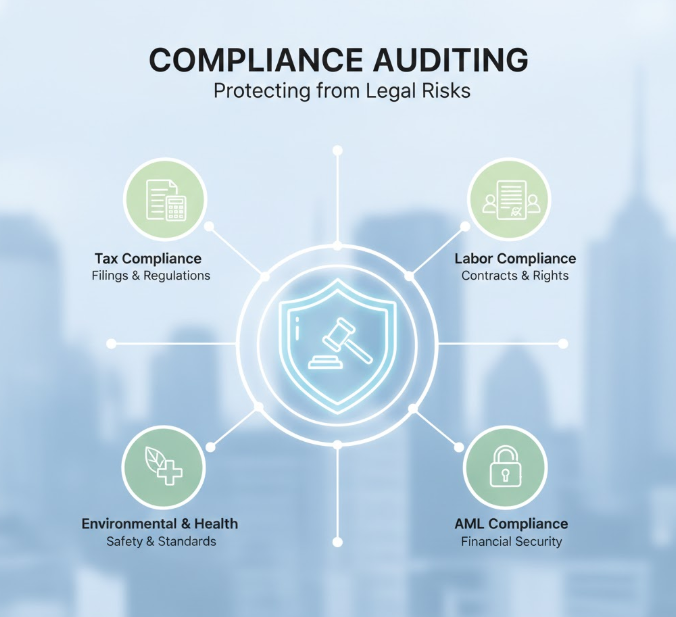
Tax Compliance. Ensuring tax returns are filed on time and amounts are calculated accurately according to state law.
-
Labor Compliance. Reviewing employment contracts, working hours, health insurance, and ensuring employee rights according to labor laws.
-
Environmental and Health Compliance. Particularly in factories and hotels, to ensure adherence to public safety and environmental protection standards.
-
Anti-Money Laundering (AML) Compliance. A vital aspect in financial institutions and large corporations.
3. Steps of Implementing a Compliance Audit
The process involves meticulous stages to ensure no legal detail is overlooked:
-
Identifying Standards. Listing all laws and policies the company must comply with.
-
Examination and Testing. Reviewing documents, records, and contracts to ensure they match defined standards.
-
Observation and Interview. Speaking with officials to ensure their understanding of regulations and how they apply them in practice.
-
Compliance Report. Issuing a report highlighting “non-conformities” and suggesting an urgent corrective plan to avoid risks.
Compliance auditing is not a “restriction” on business freedom; it is a “safety valve” that ensures business continuity. In today’s world, a single legal mistake can end a company’s years of progress. Remember: “The cost of compliance may be high, but the cost of non-compliance is always devastating.”