Many believe that marketing is just “colorful ads” or “convincing people to buy what they don’t need.” However, in modern management, marketing is the process of deeply understanding market needs and providing real solutions that create mutual value. It is the engine that ensures your idea or product reaches the right person, at the right time, and at the right price.
1. The 4Ps: The Classic Marketing Mix
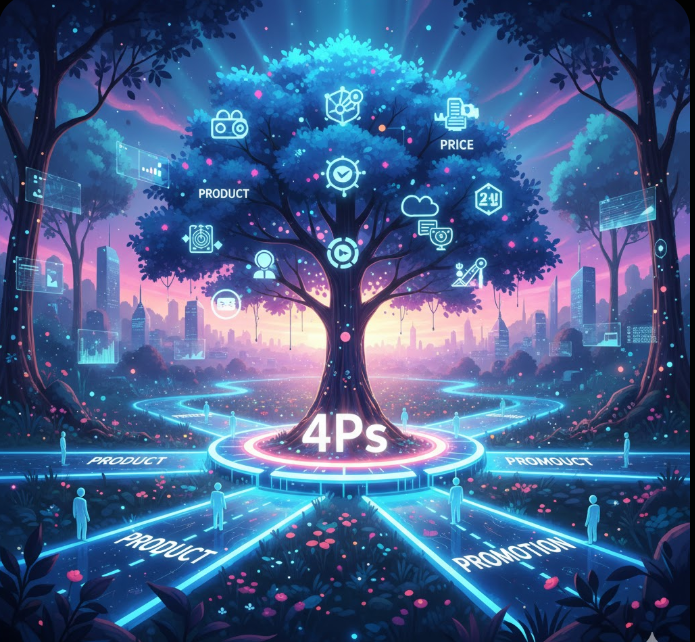
You cannot start any marketing plan without understanding the four pillars that every business activity is built upon:
-
Product. What are you offering? Your product must solve a specific problem or fulfill a pressing desire. The value isn’t in the product itself, but in the “benefit” the customer receives.
-
Price. Pricing isn’t just about cost; it’s about “perceived value.” Price is a message: high prices suggest quality and exclusivity, while low prices suggest accessibility.
-
Place. Where can the customer find you? Whether it’s a physical location or a digital platform (like MngFlow), the process of reaching you must be easy and seamless.
-
Promotion. This is how you tell the world you exist. It includes advertising, public relations, and direct communication.
2. Understanding Your Target Audience
Marketing to everyone is, in reality, marketing to “no one.” Success starts with accurately identifying your ideal customer.
-
Targeting. You must know your customer’s age, interests, and the problems they face. Are you marketing to accountants looking for technical solutions or students seeking knowledge?
-
The Customer Journey. Customers don’t buy immediately; they go through stages: Awareness, Consideration, and then the Decision. Marketing’s role is to guide them through every step.
3. Differentiation and the Unique Value Proposition (USP)
In a crowded market, why should a customer choose you over your competitors?
-
Point of Difference. You must have something that sets you apart; it could be service quality, speed of execution, or even your unique style of simplifying complex information.
-
Building Trust. Modern marketing is based on relationships, not just transactions. Customers buy from those they “trust,” making credibility your most powerful marketing tool.
4. Values-Based Marketing
People don’t buy “what” you do; they buy “why” you do it.
-
Story and Identity. Successful brands are those with a story, a value, and a clear vision. This is what builds long-term loyalty.
-
Listening to Feedback. Marketing is a dialogue, not a monologue. Listening to customer opinions and improving based on them is the best form of marketing.
Marketing starts before the product is created and ends after it is consumed. It is the science that connects your “mind” as a business owner with the “heart and needs” of the customer.